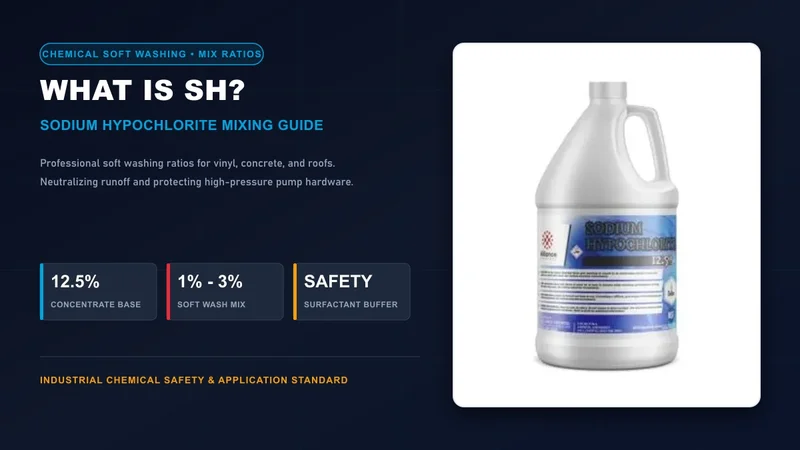
In the exterior cleaning industry, "SH" stands for Sodium Hypochlorite (NaOCl)—the active oxidizing chemical in household bleach and pool shock. Professional power washers and soft-wash operators use commercial-grade SH (typically 10% to 12.5% concentration, compared to 5% to 6% in grocery-store bleach) to chemically sanitize organic infestations like green algae, black gloeocapsa magma mildew, and lichen.
Quick Summary: The Golden Rules of Using SH
- Always Inject Downstream: Never run raw SH through your pressure washer pump. High concentrations corrode aluminum pistons and brass unloader valves. Introduce chemicals after the pump using a downstream injector or dedicated 12V soft-wash rig.
- Respect Working Dilutions: Target 0.8% to 1.2% active SH on vinyl siding and 3.0% to 4.0% on roof shingles. Over-concentrated solutions oxidize siding paint and strip aluminum finishes.
- Protect Landscaping First: Thoroughly saturate surrounding lawns, flowers, and soil with fresh water before, during, and after chemical application to prevent root burn.
Chemical Dilution Dynamics (Downstream Injection)
In soft washing, pulling straight 12.5% Sodium Hypochlorite through a high-draw downstream chemical injector dilutes the concentration according to the injector flow ratio before hitting siding or trim.
Practical Rule: A standard 10:1 injector drawing 12.5% SH delivers 12.5 / (10 + 1) = 1.14% active hypochlorite on the wall—the sweet spot for killing algae without oxidizing vinyl or stripping paint.
CALCULATE SH MIX RATIOSDid You Know? Historical Chemistry Note
Sodium hypochlorite was first produced in 1789 by French chemist Claude Louis Berthollet in Javel, Paris (giving rise to its historical French name, Eau de Javel). Beyond exterior sanitization, it remains the gold standard for drinking water purification and hospital-grade disinfection worldwide.
How SH Is Applied in Exterior Cleaning
Professional contractors never run raw SH through a pressure washer pump. High-concentration bleach oxidizes brass pump manifolds, dissolves rubber packing seals, and corrodes unloader springs. Instead, SH is introduced downstream:
- Downstream Chemical Injection: A brass or stainless siphon injector is installed at the pump outlet. Venturi suction pulls the chemical mixture into the hose line after the pump, typically diluting the mix at a 10:1 to 20:1 ratio.
- Dedicated 12V Soft Wash Pumps: For roof cleaning and heavy brick washing requiring stronger 3% to 4% mixes, contractors use dedicated 12-volt chemical-resistant diaphragm pumps with Viton or Santoprene seals.
SH Dilution & Surface Compatibility Matrix
Before applying sodium hypochlorite to any exterior substrate, refer to our verified engineering dilution table to match chemical concentration, dwell time, and injection method:
| Surface / Substrate | Target Surface SH % | Downstream Mix (12.5% Stock) | Recommended Dwell | Application Delivery |
|---|---|---|---|---|
| Vinyl Siding & Aluminum Gutters | 0.8% – 1.0% | 10:1 Injector (pull raw) | 5 – 8 minutes | Low-pressure soap tip (<100 PSI) |
| Stucco & Dryvit (EIFS) | 1.5% – 2.0% | 5:1 Injector or 12V batch | 8 – 10 minutes | Soft-wash fan tip with surfactant |
| Concrete Driveways & Brick Pavers | 2.5% – 3.0% | Pump sprayer or 12V batch | 10 – 15 minutes | Pre-treat prior to rotary surface cleaning |
| Asphalt Shingle Roofs | 3.5% – 4.0% | Dedicated 12V diaphragm pump | 15 – 20 minutes | Zero-pressure soft-wash wand only |
The Advantages of Using SH in Pressure Washing
The use of SH in pressure washing improves the cleaning process greatly because it not only helps to break down persistent stains and contaminants, but also kills mold, mildew, and algae.
This is particularly important when cleaning exterior surfaces, where these unwanted substances can thrive and cause potential health risks or structural damage if left untreated.
Effective Mold, Mildew, and Algae Removal
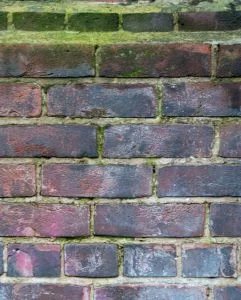
One of the main reasons SH is used in pressure washing is its amazing ability to remove mold, mildew, and algae. Mold and algae-covered bricks can be effectively cleaned using a soft wash method with the appropriate detergent.
These unwanted substances are not only ugly, but they can also pose health hazards and cause surface damage over time.
Why SH Is Environmentally Sustainable When Applied Responsibly
Although sodium hypochlorite is a strong oxidizer, it rapidly degrades upon contact with organic matter. Once it oxidizes algae and mildew, it neutralizes into simple table salt (sodium chloride), water, and oxygen. When diluted to proper application ratios and preceded by pre-wetting surrounding grass and plants, it leaves zero persistent chemical residues in soil.
Applying an SH solution also reduces water consumption drastically. Rather than grinding a 3,000 PSI nozzle back and forth against vinyl siding for hours, a low-pressure chemical coat dissolves mold on contact, letting you rinse an entire exterior wall in minutes.
Better Cleaning Results
The addition of SH to your pressure washing solution can improve overall cleaning performance significantly. It helps to break down tough stains, filth, and grime, making it easier for the high-pressure water spray to remove them from the surface.
The final result is a cleaner, brighter, and more appealing exterior that will make you proud!
Kills the Coronavirus!
To protect ourselves and our loved ones from the unique coronavirus, it is critical to maintain a clean and sterilized atmosphere in these unprecedented times.
SH has been shown to be an effective disinfectant against a variety of viruses and bacteria, including the coronavirus.
It may assist to keep surfaces clean and clear of dangerous germs when used correctly and in the optimum doses.
Precautions to Take When Using SH in Pressure Washing
While SH is a highly effective and environmentally friendly cleaning solution, it is critical to use it safely and take the required steps to protect yourself, your property, and the environment.
Wear the necessary safety equipment.
It is critical to use appropriate protective gear when dealing with SH to avoid skin irritation, eye damage, and respiratory difficulties.
Wearing gloves, goggles, a mask, and long sleeves help to reduce direct contact with the cleaning solution. Always remember that safety comes first!
Read the SDS sheet
Before using SH in your pressure washing solution, make sure you read and understand the manufacturer's Safety Data Sheet (SDS).
This document offers critical information regarding the product's correct handling, storage, and disposal, as well as potential risks and first-aid procedures.
Follow Proper Mixing and Application Guidelines
It is critical to follow the prescribed mixing ratios and application directions while using SH in pressure washing. This may differ based on the product, so consult the label or manufacturer’s instructions.
Using the proper concentration of SH will ensure that the cleaning solution is both effective and environmentally safe for every job.
Be Mindful of Surrounding Plants and Animals
While SH is generally considered eco-friendly, it can nonetheless be hazardous to plants and animals if not used carefully.
To avoid any harm, make sure to rinse off any nearby plants or vegetation before and after pressure washing, and keep dogs and wildlife away from the area while cleaning.
Alternatives to SH in Pressure Washing
While SH is a popular and effective choice for pressure washing biological growth (mold and algae), it is not a degreaser or automotive cleaner. For general exterior maintenance detergents, vehicle shampoos, and concrete cleaners, check our comprehensive guide on What Kind of Soap to Use in a Pressure Washer.
Vinegar
Vinegar is a versatile and environmentally safe cleaning ingredient that can be used for light cleaning jobs in pressure washing. It is especially effective at removing dirt, grime, and mineral deposits from surfaces.
Simply mix equal amounts of white vinegar and water and apply it to the surface with a pressure washer to utilize vinegar in pressure washing.
Remember that vinegar may be less effective than SH at removing mold, mildew, and algae.
Oxygen Bleach
Another option for SH in pressure washing is oxygen bleach, often known as sodium percarbonate. It is a non-toxic, biodegradable cleaning solution that effectively removes filth, grime, and stains from surfaces while being gentle on the environment.
To use oxygen bleach in pressure washing, mix the powder with water according to the manufacturer’s directions before applying the solution with a pressure washer.
Eco-friendly Commercial Cleaners
For jobs where sodium hypochlorite cannot be used—such as unsealed wood decks, stained fences, or properties with delicate ornamental koi ponds—environmentally friendly commercial cleaners offer effective surfactant lifting without chlorine chemistry:
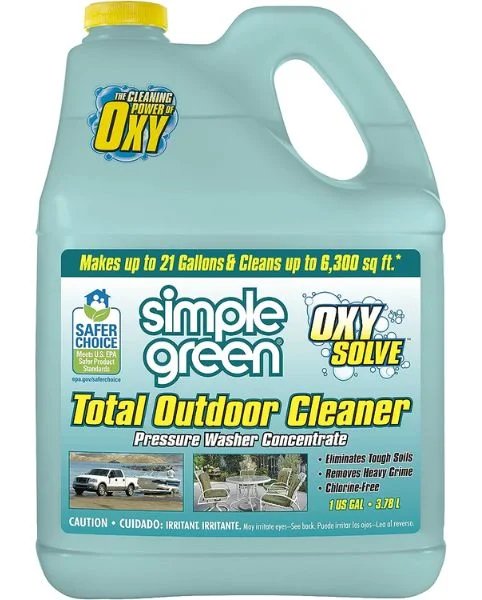
- Non-Bleach Oxygen Lift Technology: Uses fast-acting peroxide lifting bubbles to remove dirt, mold, and algae without harsh chemical fumes.
- Safer for Lawns & Pets: Safer Choice certified formula won't burn turf grass, landscaping shrubbery, or delicate garden plants when rinsed.
- Universal Exterior Application: Engineered for wood decks, vinyl siding, aluminum gutters, composite decking, and masonry brick.
Where to Buy SH for Pressure Washing
Finding the ideal SH product for your pressure washing needs is essential for getting the greatest cleaning results. With so many options on the market, it might be difficult to select the best product.
Where to Buy SH Products
SH for pressure washing is available in a variety of sites, including:
- Hardware stores in your area: Many local hardware or pool supply stores sell SH in their cleaning goods area. This option allows you to see the product in person and consult with store personnel if you have any questions or concerns.
- Centers for home improvement: Large home improvements stores, such as Home Depot or Lowe’s, frequently stock SH for pressure washing. You can find the product you need by visiting their stores or browsing their websites.
- Online merchants: SH items from many companies are available on online buying platforms such as Amazon. This option allows you to compare multiple options, read user reviews, and have the product delivered right to your door with free shipping.
Our Top Commercial SH Recommendation
To eliminate the hassle of hunting down industrial chemical suppliers, we field-tested commercial hypochlorite options available for direct shipping:
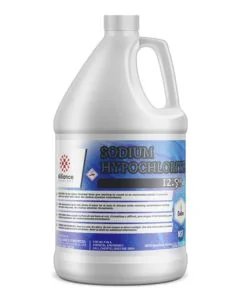
- Commercial 12.5% Concentration: Over 2.5× stronger than grocery store bleach for rapid organic eradication on porous surfaces.
- Maximum Dilution Economy: High concentration lets you mix up to 12.5 gallons of active soft-wash mix from a single concentrated gallon.
- Cellular Root Eradication: Eliminates black Gloeocapsa magma streaks, lichens, and moss spore colonies in a single 10-minute dwell pass.
Correct Way to Apply
Here are the steps to apply sodium hypochlorite with a pressure washer, ensuring that your surfaces are not only clean but also disinfected.
Step 1: Fill the Pressure Washer Tank
Take your prepared sodium hypochlorite solution and fill the tank of your pressure washer. Make sure that your pressure washer is turned off and completely cool before filling it to prevent any accidents.
Some models may require you to use a downstream injector or a separate sprayer to apply chemicals, so check your manufacturer's instructions.
Step 2: Wet the Surface
Before applying the disinfectant, wet the surface to be cleaned with a low-pressure spray. This prepares the surface by removing loose dirt and debris, allowing the disinfectant to get direct contact with the areas where it's most needed.
Step 3: Apply Sodium Hypochlorite
Using the pressure washer, apply the SH solution using low pressure so the disinfectant doesn’t aerosolize and to ensure the safety of the person applying it. Cover the surface evenly, taking care to spray from a distance that allows the product to reach all necessary areas without causing any damage.
Step 4: Allow Dwell Time
After application, allow the sodium hypochlorite solution to dwell on the surface for the recommended time. Dwell time is crucial as it gives the disinfectant enough time to break down the stubborn stains and kill any pathogens present.
The appropriate dwell time varies based on the concentration of the solution and the type of surface, so refer to the guidelines for your specific cleaner.
Step 5: Rinse the Surface
Once the dwell time is over, thoroughly rinse off the sodium hypochlorite solution with clean water using your pressure washer. Ensure all traces of the disinfectant are gone, as residual chemicals can be harmful if left to dry on the surface.
Step 6: Let It Dry
After rinsing, allow the surface to let it dry completely. This step is essential, especially for areas where slip hazards could occur, or where a slick surface would be undesirable. It also ensures that the disinfectant has completed its job before any contact.
How to Care for Your Pressure Washer After Using SH
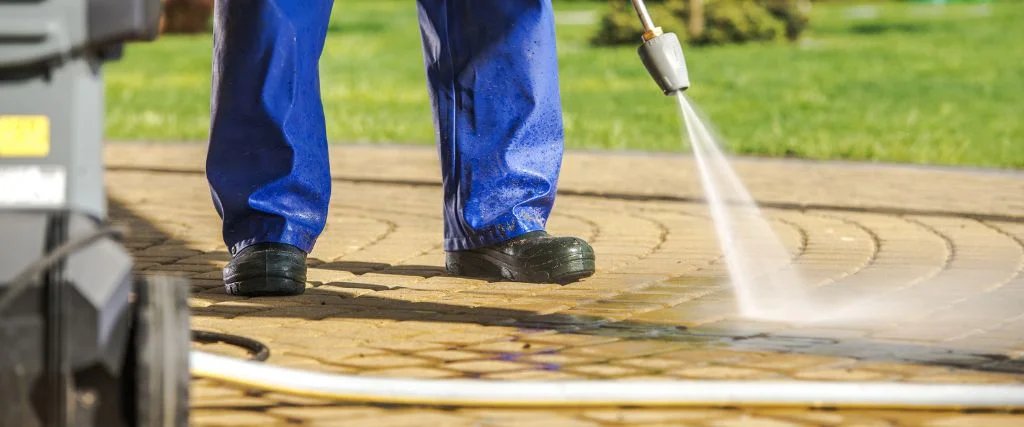
Proper maintenance promotes effective cleaning and extends the life of your pressure washer.
- After each usage, clean the nozzles and attachments: Cleaning nozzles and attachments of dirt, grime, and debris minimizes clogs and ensures constant performance throughout cleaning activities.
- To avoid residue buildup, flush the system with clean water as follows: Flushing helps preserve the internal components of the pressure washer from potential damage caused by cleaning solution residues, especially when using SH or other chemical agents.
- Regularly inspect and replace hoses and seals: Checking hoses and seals for wear, damage, or leaks is essential after every use. Early repairs enhance the life of your pressure washer.
- Keep the pressure washer in a cool, dry location: Proper storage protects the unit from damage caused by exposure to the weather and keeps it ready to use whenever it is required.
- SH solution should be kept in a cool, dry location: To keep the efficacy of your SH solution, remember to store it in a cool, shaded area. Proper storage ensures that your cleaning chemical performs optimally and has a longer shelf life.
Final Thoughts
Now that we’ve addressed the question, “What is SH in pressure washing?” it’s time to put its incredible cleaning power to the test. With the information in this blog, you’ll be able to tackle your next pressure-washing assignment like an expert.
Don’t be afraid to test SH and see how it can actually transform your cleaning routine. You’ll wonder how you ever got by without it!