
Pressure Washing Pricing & Profit Margin Calculator
Eyeballing driveways or copying Facebook group prices is how guys end up working 70-hour weeks for apprentice wages. Real profit in exterior cleaning isn't about guessing. It's about knowing your exact cost floor before you pull a starter cord: crew wages, gallons of 12.5% SH burned, fuel transit, and pump wear reserves. Use the quoting engine below to build profitable bids, test real net margins, enforce minimum trip charges, and print clean client estimates.
The Margin vs. Markup Trap Costing Contractors Thousands
Most new operators calculate their direct costs (say, $200 for wages and bleach) and add 40% markup expecting a 40% profit margin: $200 × 1.40 = $280. But margin isn't markup. Margin is profit divided by final price. At $280, your $80 take-home is an actual margin of 28.6%. To clear a true 40% margin, your math has to be $200 ÷ (1 - 0.40) = $333.33. Confusing the two burns $53.33 on a single basic driveway.
The Invisible Costs: Rig Wear, Chemical Burn & Transit
Contractors go broke when they only bid trigger time. Every running hour eats chemical, burns truck fuel, thins pump packings, and puts fatigue cycles on unloader springs. If you don't bake $20 to $40 into every ticket for rig reserves and insurance, your "profits" vanish the moment a brass check valve cracks or a hose bursts on an asphalt shingle roof.
Need to Calculate Physical Water Flow & Job Run Time?
Before quoting a job, check that the customer's outdoor spigot can feed your pump without starving it of water. To calculate active trigger time, chemical dwell cycles, and buffer tank needs, use our free Pressure Washing Run Time & Water Usage Estimator.
Pressure Washer Job Pricing & Margin Engine
Healthy Profit Margin: 40.0% Net
Your bid clears all direct expenses, vehicle transit, chemical batch costs, and equipment wear reserves.
Unit Rate: $0.17 / Sq.Ft | Total Costs: $200.00 | Net Take-Home: $133.33The Contractor Math: Pricing for Long-Term Rig Survival
Pressure washing has great margins—often 40% to 50% net on well-run rigs. But it chews up contractors who price by gut feel. When rigs get sold for pennies on Craigslist, it's rarely because the owner couldn't wash concrete. It's because they ran out of cash bidding on gross revenue instead of true net profit.
1. The Margin vs. Markup Formula Explained
Confusing markup with margin is the costliest arithmetic mistake in contracting. Here is the actual math:
Mathematical Formula Difference
Markup Formula: Quote = Total Job Cost × (1 + Markup %)
Profit Margin Formula: Quote = Total Job Cost ÷ (1 - Margin %)
Say your direct job expenses hit $300 (tech pay, sodium hypochlorite, truck fuel, and pump reserves):
- At 40% Markup: You charge
$300 × 1.40 = $420. Your profit is $120. Dividing $120 by $420 gives you a 28.5% profit margin. - At 40% Profit Margin: You charge
$300 ÷ (1 - 0.40) = $500. Your profit is $200. You keep a clean 40.0% margin.
That math error surrenders $80 of pocket cash on one house wash. Multiply that over 100 tickets a season, and you just handed $8,000 in personal income to clients who would have paid the $500 without blinking.
2026 Pressure Washing Cost & Speed Benchmarks
Square-foot rates change depending on your zip code and water supply, but production speeds stay consistent. Here are real-world cleaning rates, hourly outputs, and setup choices from commercial field operations:
| Surface / Job Type | Average Price per Sq. Ft. | Cleaning Speed (Sq Ft / Hour) | Best Equipment & Method |
|---|---|---|---|
| Concrete Driveways & Sidewalks | $0.18 – $0.28 | 1,200 – 2,200 sq. ft./hr | Rotary surface cleaner (4x GPM rule) + post-rinse |
| Vinyl & Aluminum House Siding | $0.25 – $0.38 | 800 – 1,400 sq. ft./hr | Downstream chemical soft wash (low pressure, high soap dwell) |
| Roof Soft Wash (Shingles / Tile) | $0.35 – $0.65 | 500 – 800 sq. ft./hr | Dedicated 12V diaphragm pump (3–4% SH mix, zero pressure) |
| Wood Decks & Privacy Fences | $0.35 – $0.55 | 400 – 600 sq. ft./hr | Low pressure (1,000–1,200 PSI), wide 40° fan tip, wood brightener |
| Commercial Dumpster Pads & Drive-Thrus | $0.25 – $0.45 | 600 – 1,000 sq. ft./hr | Heavy alkaline degreaser + hot water commercial pressure washer |
2. Calculating Chemical Batch Expenses Accurately
Bleach and soap aren't overhead—they are consumable materials you bill directly into the ticket. Your chemical burn rate depends entirely on whether you are downstreaming or batch-mixing in a 12V soft wash tank:
- Downstream Injection (10:1 to 20:1 Draw): Pulling 12.5% sodium hypochlorite (SH) downstream through a high-pressure line with a dual-bar J-rod lays down roughly 0.8% to 1.2% active SH on siding. On a standard 2,000 sq ft two-story home, you will run through 3 to 5 gallons of neat SH ($15 to $25 wholesale) plus about $3 of surfactant to keep it clinging to the vinyl.
- Dedicated 12V Soft Wash (Roofs & Stucco): Roof shingles require a hot 3% to 4% mix to melt gloeocapsa magma without blasting granule coatings off shingles. That means 10 to 15 gallons of SH per roof ($50 to $75+ in raw chemical). If you don't add that to the bid, you end up paying for the customer's roof wash out of your own paycheck. Calculate precise tank batches with our Chemical Dilution Calculator.
3. Rig Wear Reserves: Why Every Job Needs a $15 to $20 Equipment Allowance
A commercial triplex pump running 3,500 PSI is a hydraulic pressure cooker. Ceramic plungers cycle thousands of times per hour. On every job, packing V-rings shed microscopic Teflon particles, unloader ball seats pit from micro-cavitation, and vibration rattles fittings loose. Those repairs aren't anomalies; they are scheduled physics:
- Spray Tip Wear: High-velocity water loaded with micro-grit slowly bores out nozzle orifices. After 40 to 50 operating hours, a #4.0 tip widens into a #4.5, bleeding 350 to 500 PSI off your surface cleaner. Calibrate tips with our Pressure Washer Nozzle Size Calculator before you lose cleaning speed.
- Swivel Rebuilds: Surface cleaner rotary swivels need bearing and seal kits ($60–$90) every 80 to 100 hours of driveway work. Size attachments properly with our Surface Cleaner Size Calculator to cut side-load bearing torque.
- Hose Friction Loss: Pushing 8 GPM through 200 feet of 3/8-inch hose generates heavy friction backpressure. Map out your line drops with our Hose Friction Loss Calculator.
- Water Deficit & Pump Cavitation: Hooking a 5.5 GPM or 8 GPM commercial rig to a weak 3.5 GPM residential hose bib starves the pump and cracks ceramic plungers. Test flow rates and buffer tank capacity with our Pressure Washing Run Time & Water Usage Estimator.
Stop Paying Monthly Seat Taxes for Clunky Field CRM Apps
Ditch bloated generic apps charging $100+/month per technician. We engineer streamlined, mobile-first estimating and invoicing systems calibrated specifically to your wash rig, chemical recipes, and pricing rules.
Essential Field Quoting & Rig Calibration Tools
You cannot bid accurately if you're pacing off driveways with shoe lengths or guessing pump output. Keep these five calibration and measurement tools in your truck cab:
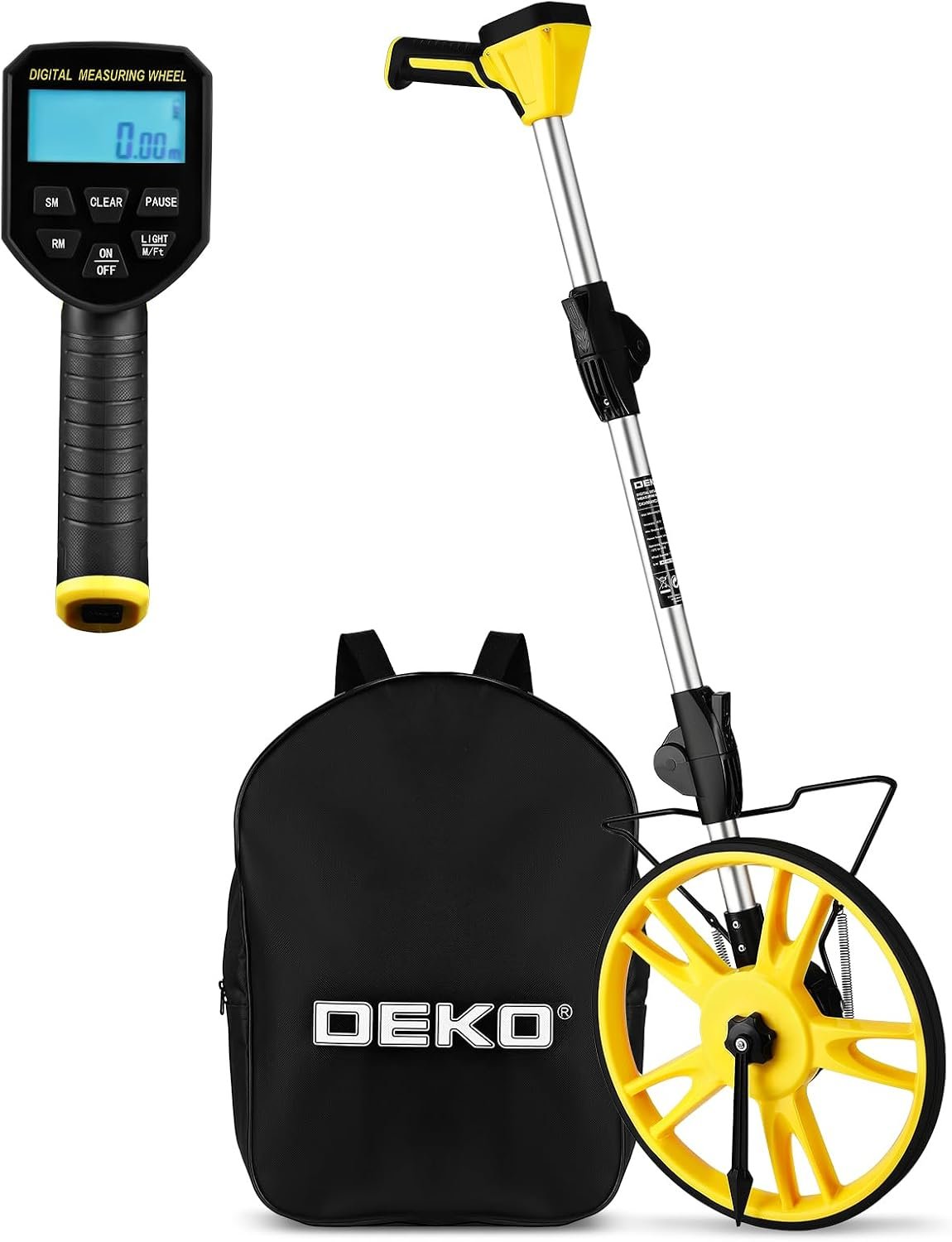
DEKOPRO 12.5" Digital Measuring Wheel
Large digital display in feet or meters with folding aluminum frame. Clocks exact driveway and commercial lot square footage in two minutes flat without pacing error.
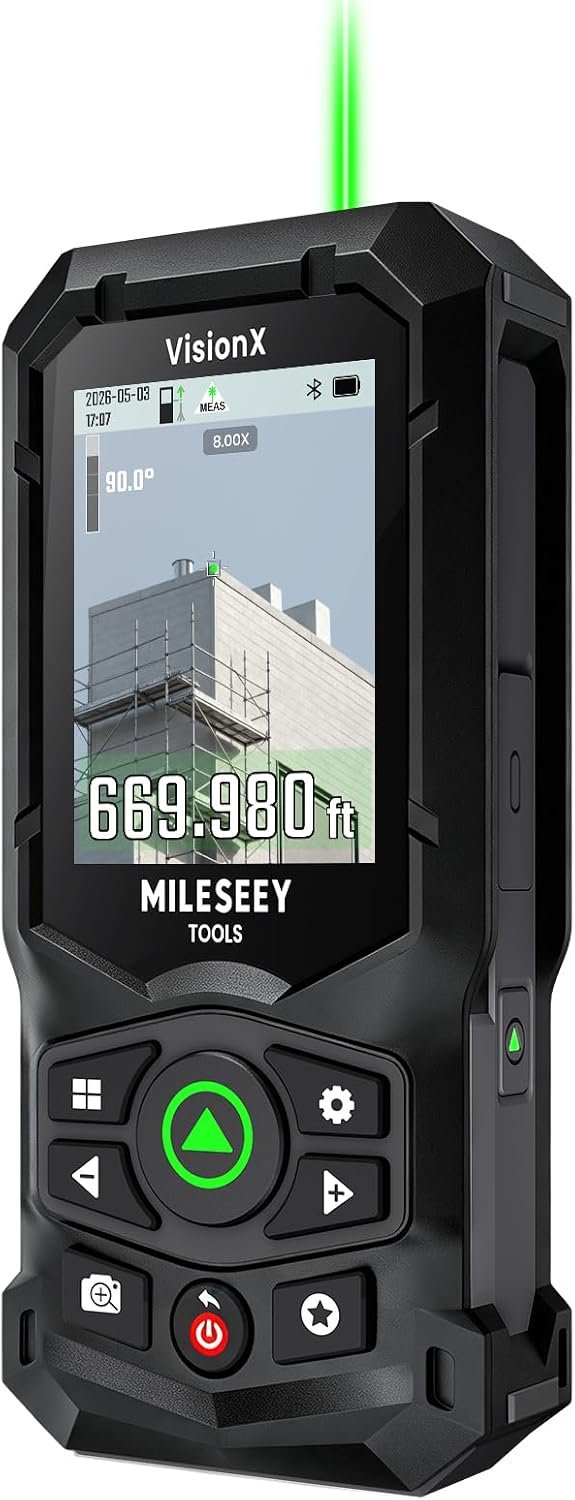
MILESEEY S50C 670ft Green Laser Measure with Camera
Camera viewfinder with 8x digital zoom. Pins peak roof ridges, second-story siding heights, and gutters directly from the driveway without dragging out an extension ladder.
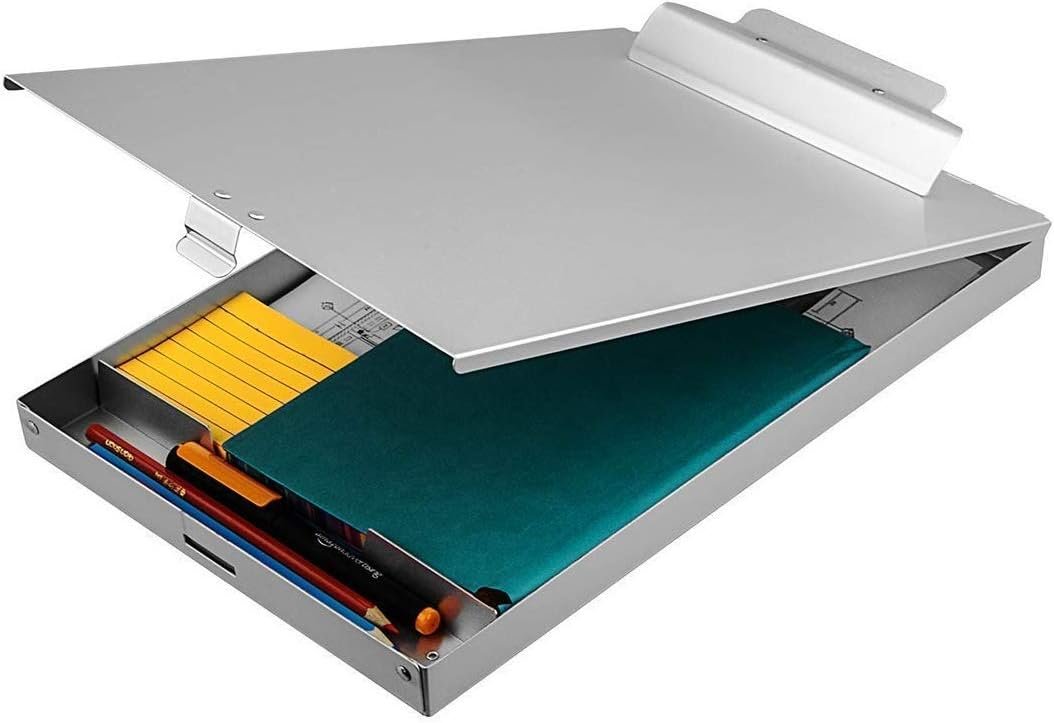
Heavy-Duty Aluminum Storage Clipboard & Form Box
Sturdy aluminum clipboard box (9.25 x 13.78 in). Keeps printed estimate sheets, chemical logs, and signed work orders dry inside a wet truck cab.
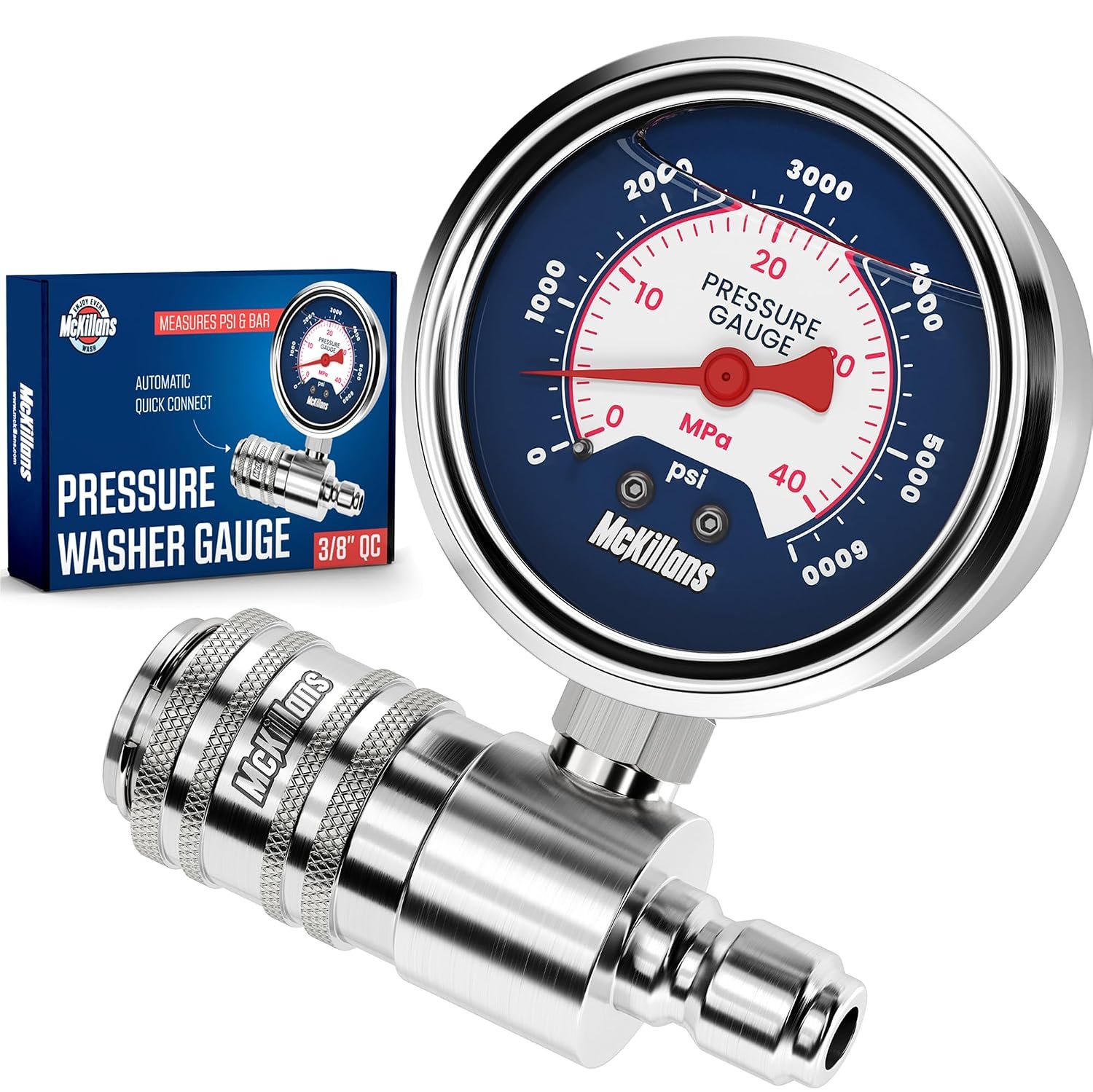
McKillans® 6000 PSI Stainless Steel Pressure Gauge
Stainless steel 3/8-inch quick-connect gauge. Pins between your unloader and whip line to read actual working PSI, catch unloader spikes, and prevent blown pump seals.
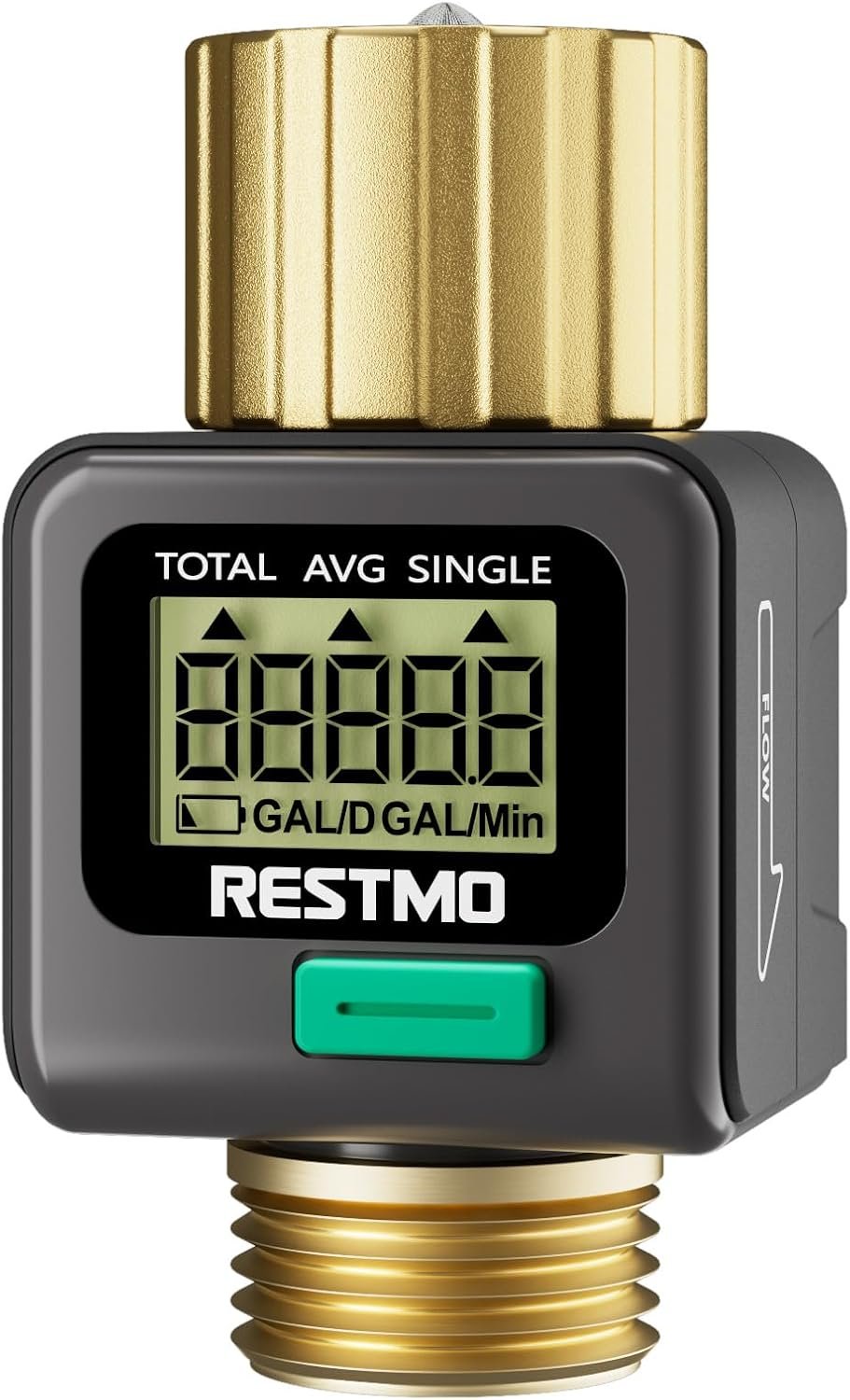
RESTMO Water Flow Meter & Consumption Gauge
Inline spigot flow gauge that clocks live GPM and total gallons. Tells you instantly if a residential spigot can feed your rig directly or if you need to run off a buffer tank.

Pressure Washing Job Pricing & Profit Margin FAQs
How much should I charge for pressure washing per square foot in 2026?
Most working rigs charge $0.18 to $0.30 per square foot for flat concrete like driveways and sidewalks. House siding soft washing runs $0.22 to $0.35 per square foot, while steep shingle roofs run $0.35 to $0.60 per square foot due to hot chemical mixes (3–4% SH), fall protection gear, and ladder liability.
What is a healthy profit margin for a pressure washing business?
A solo operator with a paid-off truck and trailer rig should target 40% to 55% true net profit after deducting their own hourly wage, chemical stock, fuel, and equipment wear reserves. Multi-truck operations with employee crews, shop rent, and paid ads generally run between 25% and 35% net.
What is the difference between profit margin and markup in contracting?
Markup is what you add to your costs (Price = Cost × [1 + Markup]). Margin is the chunk of the customer's total payment you keep (Price = Cost ÷ [1 - Margin]). If a driveway costs you $200 and you mark it up 40%, you charge $280 and pocket $80—which is only a 28.6% margin. If you want a 40% margin, you have to charge $333.33.
How do I calculate chemical costs per pressure washing job?
Multiply the gallons of 12.5% sodium hypochlorite (SH) and surfactant required for the surface. For an average 2,000 sq ft home using a downstream injector, you will burn roughly 3 to 5 gallons of 12.5% SH ($15 to $25 wholesale) and 4 to 8 ounces of surfactant ($3 to $5). Total chemical outlay rarely exceeds $30 on a house, unless you run into heavy black roof stains or oil spots on concrete.
Why should I enforce a minimum job charge, and how much should it be?
Because drive time and equipment staging aren't free. Even if a small walkway takes 10 minutes of trigger time, you still burned 45 minutes driving to the property, laying out 200 feet of hose, bleeding air from lines, and rolling everything back up. A minimum callout fee of $150 to $200 guarantees you get paid for truck transit and setup overhead.
How many square feet can a solo operator pressure wash per hour?
With a 4 GPM machine and a 16-inch surface cleaner, expect to wash 1,500 to 2,000 square feet of flat concrete per hour. Step up to an 8 GPM machine and a 20- or 24-inch surface cleaner, and you can push 3,000 to 4,000 square feet per hour. Siding soft washing runs about 1,000 square feet of wall area per hour once hoses are staged.
Should I charge by the hour or by square footage for pressure washing?
Never quote hourly to a customer. Quoting hourly penalizes you for buying faster rigs—if an 8 GPM machine lets you wash a driveway in 45 minutes instead of two hours, an hourly rate cuts your paycheck in half. Flat-rate package pricing and square-foot bids reward your equipment investment and give homeowners clear upfront numbers.